
INSPIRATIONS
& STORIES
I’ve always kept an art studio in my home. My journey into ceramics began on an impulsive whim—buying a wheel without quite knowing where it would lead. Over time, my practice has evolved as I’ve explored the limitless possibilities of materials. I especially love experimenting with foraged minerals and wild clays, layering textures and creating unexpected colors and surfaces that bring each piece to life. A deep influence in my work has been my father, an exploration geologist with an unending appetite for outdoor adventure. My father passed away before I could fully share how his work shaped my molten rock creations. I like to think he’d be fascinated—or perhaps slightly horrified—to know I’ve melted his rocks into my art. Enjoy the photographs. captured with my iPhone, of long walks, quiet pauses, attention held on light, texture, and small details. All forcing me to move slowly and absorb the landscape.

Fluidity
&Texture

On La Digue Island, granite holds the memory of water. Wind, tide, and time soften what was once rigid, carving stone into quiet movement. These rocks appear to flow, their surfaces shaped by pressure and patience rather than force. In ceramics, clay carries a similar dialogue. Soft and responsive in the hand, it records every touch, every pause. As it dries and fires, it hardens yet the memory of fluidity remains in its curves, cavities, and textures. Like the stones of La Digue, the work sits between states: erosion and formation, softness and solidity.


Color
&Flow

"My feet may be upon you mother yet your horizon meets my eyes. Where are you? I smell your salt, your mosses, Inhale wind and light. The stone, it dusts my fingertips. The tangled grasses clutch. Where are you mother moss? Above, below or in? And who am I if not you?" Chikanishing Trail in the Killarney Provincial Park in Canada, meanders through forests, alongside ocean coves framed by pink granite ridges made from Potassium Feldspar.

Lines
&Curves

“No one notices the tiny pebbles. How much space they can hold; How much meaning they can possess” Hand built with red stoneware, I left the exterior smoothed, matte and unglazed with an iridescent black glossy glaze in the interior.


Mist
&Ash

I want those who engage with my ceramics to feel the essence of the materials, to sense the histories embedded within them, and to connect with the humanity in their raw, imperfect forms. Each piece is a tangible link to the earth’s beauty and the story it holds.

Silica
&Sand

My art is focused on incorporating foraged and gathered elements. The glaze on this particular work is made entirely from waste materials: glass, granite slurry, limestone, wood ash, and copper slag. Each element with its own story: a glass purchased and smashed from Juárez, Mexico, salvaged granite slurry , limestone collected from roadside cutouts in Southwest Missouri, wood ash from backyard grills and slag foraged around aboandoned copper mines in Nothern Michigan.


Leaves
&Gravel

I wasn't satisfied with the original version of this. I added more granite pieces with slip and glaze to appears as a falling waterfall, the tumbling ocean surf or even the sunlight between cliffs. A friend of mine says that in this piece she "senses the crackling of fall leaves, feels the gravel of a road and a call for surrender". Truth is, art touches the senses and it can be whatever we need it to be.

Minerals
&Cracks

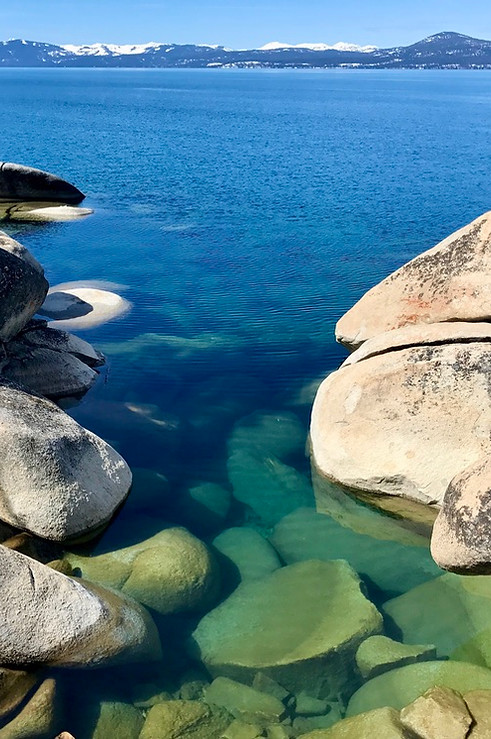
The brilliant green water below these falls was breathtaking—unexpected, almost unreal. Its vivid, neon hue is the result of many converging elements; glacial flour suspended in meltwater, mineral-rich streams filtering through stone, and sunlight refracting through it all. Against the pale, bleached chert, the color feels even more electric. I found myself wishing I knew the exact recipe, how each element contributes, and wishing even more that my geologist father were beside me, ready to dissect every layer and process. Though he wasn’t there, his influence was. Along the drive to the trailhead we passed some working mines, I gathered stones from nearby outcrops, hoping to carry a trace of that mineral richness with me. The ceramics that followed were shaped by this place—glazes saturated with copper, layered over undertones of iron-rich, wild foraged clay—an attempt to translate water, stone, and memory into form.

Fragility
&Depth

I respect that pottery has always come from the earth and using natural materials is nothing new. It’s an ancient art. Long before it became an object, it was soil, stone, and mineral shaped by time. My work begins with gathering—walking landscapes, noticing color in rock, weight in soil, traces of place. Some of these materials hold memories: a shoreline, a trip, a quiet moment of looking. I bring this wider range of minerals back to the studio and use them the way an abstract painter uses paint—layering, responding, allowing chance—so the finished surface carries both the land it came from and the hand that shaped it.
Pressure
&Contrast

I’ve long contemplated how to incorporate color into my work, but I have a conflicted relationship with it. I’m drawn to color but I also find it overwhelming. To create a more organic feel, I turned to foraged rock fragments and their natural minerals rather than relying solely on commercial products. I’m pleased with how the impurities in these layered materials introduce movement and an unpredictable, organic quality to the pieces.


Cultivation
&Beauty

Alongside family, travel and ceramics, an important part of my life has been my work as a pediatrician. Advocacy for children and teens has been my career focus but it had left me with little time in my studio. While I'm proud of the difference I've made and grateful for the purpose it has brought to my life, l spend two days a week in clinic and now able fully immerse myself in the creative solitude of my art studio. After years of balancing both worlds, l'm embracing ceramics full time and finally feel at ease and confident in calling myself an artist.